Television Review: Follow the Leader (Lost, S3X15, 2009)

Follow the Leader (S5X15)
Airdate: 6 May 2009
Written by: Paul Zbyszewski & Elizabeth Sarnoff
Directed by: Stephen Williams
Running Time: 42 minutes
The final seasons of Lost represent a distinct shift in the show’s DNA, moving away from the introspective character studies that defined its early years towards a frantic drive towards resolution. As the creators approached the series' established end date, the pacing accelerated dramatically, necessitating a delicate balance between character exposition and pure plot advancement. In Follow the Leader, the penultimate episode of Season 5, this dynamic becomes starkly apparent. It serves less as a standalone narrative and more as a calculated chess move, designed to position the remaining cast members on specific squares for the explosive two-part finale. The episode acknowledges that time is no longer on the show's side, forcing the narrative to sprint rather than run, a decision that yields both triumphs and frustrations for the audience.
The narrative opens with a jolt of violence and tragedy in The Variables arc. Daniel Faraday’s death at the hands of Eloise Hawking is a shocking, necessary event, yet it is executed with a terrifying efficiency. Eloise, in taking Faraday’s notebook, recognises her own handwriting and realises she has killed her own son. However, the show denies her any space for grief; the clock is ticking, and the Swan Station catastrophe looms. When Jack and Kate are captured witnessing this tragedy, Eloise calmly adopts her son’s plan to prevent the explosion. She leads the party to the Temple where “Jughead”, a hydrogen bomb, is stored. Kate refuses to follow, but the group is bolstered by Sayid, who has been hiding in the jungle since shooting the young Ben Linus. This sequence establishes the urgency that will permeate the rest of the episode, where survival takes precedence over emotional processing.
Concurrently, the Barracks storyline provides some of the episode's most memorable moments. Miles, Jin, and Hurley escape Barracks and encounter Dr. Pierre Chang. This interaction serves as a crucial plot mechanism where Chang is convinced that the trio are from the future. He realises the truth of Daniel Faraday’s warnings and orders the Dharma facilities to be evacuated, dispatching submarines for the women and children. This scene culminates in a conversation that is nothing short of brilliant. Chang interrogates Hurley on basic facts, expecting a 1977 perspective. Hurley’s inability to name the current President and his belief that the Korean War is Hollywood fiction confirms his status as a time traveller. It is a funny, memorable scene that adds necessary levity to a narrative drenched in tragedy and violence, effectively confirming and reverting time travel tropes in a single exchange.
The interrogation of Sawyer and Juliet by Radzinsky offers a brutal contrast to the scientific tension elsewhere. His methods clash with the de facto vanished authority of Horace Goodspeed. Sawyer remains stoic until Phil suggests a violent blow to Juliet, at which point he caves, agreeing to a deal. He provides a detailed map of the Others’ settlement in exchange for a spot on the submarine. The plan appears successful, yet Kate arriving in the submarine as another prisoner complicates Sawyer’s plan for the future. This inclusion feels slightly unorganic, appearing more like an attempt to artificially complicate the plot than an organic character development choice. It raises questions about the stakes if the character dynamics are forced rather than earned.
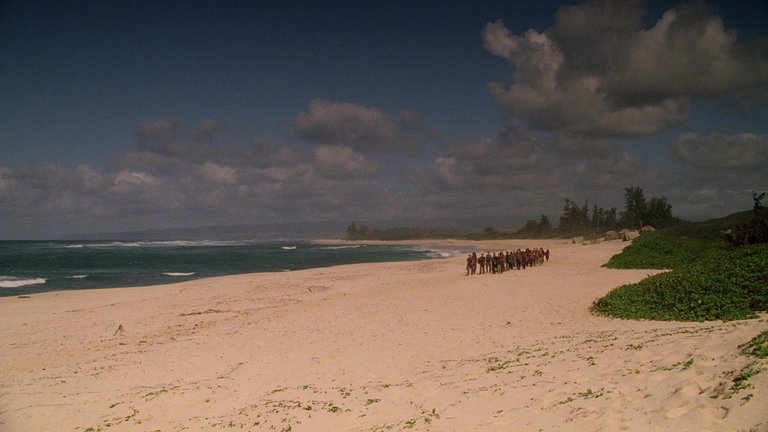
Thirty years later, in 2007, John Locke establishes a terrifying new authority over the Others, surprising Richard and leaving Ben as a passive witness. Locke takes Richard to the Beechcraft crash site, ordering him to deliver a compass to his 2004 self during a brief time shift. Following this, Locke gathers the Others for a pilgrimage march to the mysterious Jacob, eventually admitting his intention to kill him to Ben. While the 2007 segment visually repeats the grand beach exodus from the end of Season 3, serving as a true cliffhanger, there is a sense of repetitiveness. The scene reconstructing the encounter between Richard and the confused, time-traveling Locke feels particularly familiar. Yet, lacking the ability to time travel into the future, the audience is left with genuine uncertainty regarding the outcome.
Despite these minor flaws, Follow the Leader is a strong entry in the season. The emphasis on plot development results in a fast pace, well-designed action pieces, and plenty of violence. The audience knows something spectacular will happen—the Swan Station disaster, the establishment of the button pushing, and the chain of events leading to the Oceanic 815 Flight disaster—but the episode leaves enough blanks to keep curiosity tantalising. Locke’s admission of his murderous intents towards Jacob serves as a compelling mini-cliffhanger, ensuring the audience remains invested in the resolution. Ultimately, while the episode feels rushed and occasionally repetitive, its function as a bridge between the mystery and the apocalypse is executed with competence, leaving viewers eager to see how the pieces finally fall into place.
RATING: 7/10 (+++)
==
Blog in Croatian https://draxblog.com
Blog in English https://draxreview.wordpress.com/
InLeo blog https://inleo.io/@drax.leo
LeoDex: https://leodex.io/?ref=drax
InLeo: https://inleo.io/signup?referral=drax.leo
Hiveonboard: https://hiveonboard.com?ref=drax
Rising Star game: https://www.risingstargame.com?referrer=drax
1Inch: https://1inch.exchange/#/r/0x83823d8CCB74F828148258BB4457642124b1328e
BTC donations: 1EWxiMiP6iiG9rger3NuUSd6HByaxQWafG
ETH donations: 0xB305F144323b99e6f8b1d66f5D7DE78B498C32A7
BCH donations: qpvxw0jax79lhmvlgcldkzpqanf03r9cjv8y6gtmk9