Television Review: The Old Gods and the New (Game of Thrones, S2X06, 2012)

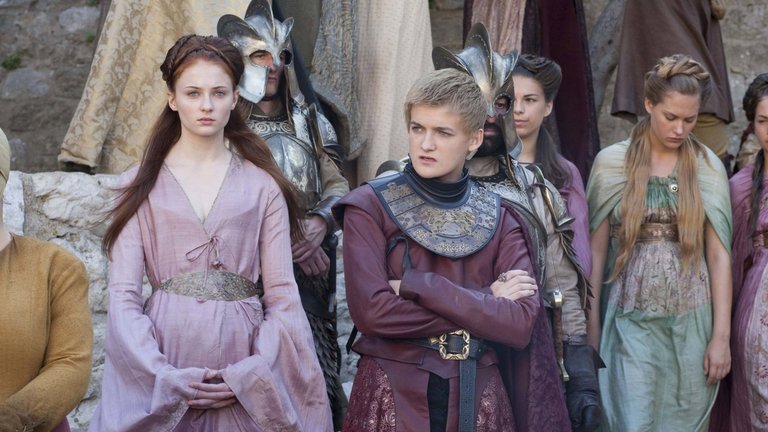
The Old Gods and the New (S02E06)
Airdate: 6 May 2012
Written by: Vanessa Taylor
Directed by: David Nutter
Running Time: 54 minutes
The sprawling, epic scope of George R. R. Martin’s literary work, which remained unfinished as Game of Thrones entered its second season, presented the television adaptation with a monumental challenge. The scriptwriters were tasked with condensing vast sections of text, a multitude of characters, essential exposition, and pivotal events into a manageable episodic format. This inevitably led to a plethora of omissions, simplifications, and a narrative pace that could, at times, feel decidedly rushed. This effect was, however, frequently mitigated by skilful direction and strong performances. A prime example of this tension between compression and execution is found in The Old Gods and the New, the sixth episode of Season Two. Directed by David Nutter, an alumnus of The X-Files renowned for his handling of suspense, the episode is structurally notable for featuring two consecutive major cliffhangers, a narrative device that underscores the frantic pace at which the story’s many threads are being advanced.
The episode commences with the efficient, indirect portrayal of a major event: the fall of Winterfell. Through Maester Luwin’s despairing dispatch of a raven, the audience, alongside the Stark loyalists, pieces together the aftermath of Theon Greyjoy’s betrayal. This approach, relying on character reaction and inference from the previous episode’s hints, is a testament to the show’s economical storytelling. For Theon, this conquest should be a triumphant affirmation of his worth to his true family, the Ironborn. Instead, it instantly incinerates every bond he forged in the North, most poignantly with Bran Stark. Alfie Allen masterfully portrays Theon’s brittle arrogance as Bran pragmatically brings formal surrender, urging Winterfell’s residents to accept the new regime. The confrontation with the captured Rodrik Cassell, however, shatters this fragile façade. Rodrik’s defiant spit in Theon’s face forces a crisis of authority. Urged by the vicious Dagmer Cleftjaw to demonstrate strength, Theon reluctantly decides to carry out the execution himself, in a misguided attempt to mimic Ned Stark’s stern honour. The result is a botched, messy decapitation—a horrifying spectacle that strips Theon’s rule of its last vestige of legitimacy, cementing his hold on Winterfell through brute force alone. This moment of profound failure is immediately juxtaposed with Osha’s calculated seduction. Here, the adaptation makes a significant departure from the source material. Natalie Tena’s Osha is not the middle-aged, hardened survivor of the novels, but a dangerous, exotic ‘vamp’ who intrigues Theon with promises of wildling ways. This scene, which dutifully includes Tena disrobing, feels like a concession to HBO’s trademark ‘spicy’ content, providing the pretext for Osha’s later, daring orchestration of the escape for Bran, Rickon, Hodor, and the direwolves—the episode’s first major cliffhanger.
The news of Winterfell’s fall reaches Robb Stark amidst a fragile moment of reunion with his mother, Catelyn, who has returned from Renly’s camp with Brienne of Tarth in tow. Richard Madden conveys Robb’s blistering fury at Theon’s treachery with palpable intensity, his immediate impulse to march his army north and reclaim his home threatening to undo all his hard-won victories in the south. The cooler, more sinister counsel comes from Roose Bolton. His suggestion to let his ‘boy’ handle Theon with a modest force of five hundred men is a masterclass in political manipulation, subtly advancing his own house’s interests while appearing the voice of reason. This scene efficiently underscores the strategic overextension of the Stark cause.
In King’s Landing, the episode delivers one of its most visceral sequences. The cumulative pressures of the approaching winter, a flood of war refugees, spreading rumours of Joffrey’s illegitimacy, Tyrion’s unpopular reforms, and looming famine have transformed the city into a powder keg. The riot that erupts following Princess Myrcella’s departure for Dorne is a tour de force of chaos. The mob’s fury is horrifically realised, culminating in the High Septon (David Verrey) being literally torn apart. The royal family’s frantic retreat into the Red Keep is a stark depiction of their vulnerability. For Sansa, the chaos becomes a personal nightmare. Separated from the group, she is physically assaulted and nearly gang-raped by a mob of thugs—a moment of extreme peril that highlights the show’s willingness to confront the brutal realities its world. Her rescue by Sandor Clegane is both brutal and cathartic, as ‘The Hound’ dispatches her attackers with terrifying ease. This protection, born of a twisted sense of duty, further complicates their uniquely toxic relationship.
At Harrenhal, Arya Stark’s precarious situation reaches a new peak of tension with the arrival of Petyr Baelish. Masquerading as a cupbearer, Arya must be in room containing both Tywin Lannister, who already suspects she is highborn, and ‘Littlefinger’, who would recognise her instantly. Maisie Williams’s performance is superb, her desperate attempts to hide her face a silent ballet of fear. That Baelish does not spot her strains credulity slightly, but serves the plot’s need. His political machinations—suggesting an alliance with the Tyrells following Renly’s death—add another layer to the southern conflict. Arya’s bold theft of a critical message regarding Lannister troop movements, however, leads to her being discovered by Ser Amory Lorch (Kintan McKeown). Her swift solution, naming Lorch as her second death to Jaqen H’ghar, is a thrilling moment that showcases her growing agency. Jaqen’s prompt fulfilment of the request is a chilling demonstration of the Faceless Man’s power.
Beyond the Wall, the episode introduces one of the series’ most beloved characters: Ygritte. Captured by Qhorin Halfhand’s ranging party, her survival hinges on Jon Snow’s mercy. Qhorin’s cold pragmatism—advocating her execution—clashes with Jon’s ingrained honour. His hesitation allows Ygritte to escape, leading to a pursuit that strands them together in the frozen wilderness. Rose Leslie immediately imbues Ygritte with a fiery, mocking vitality that stands in stark contrast to Jon’s dour solemnity. She suggests that they must share body heat to survive. The chemistry between Kit Harington and Leslie is electrically palpable, a fact made more intriguing with the knowledge that the actors would become a couple in real life. This nascent relationship is portrayed with far more authentic spark and tension than the concurrent romance between Robb Stark and Talisa Maegyr, which often feels like a contrived, underwritten subplot inserted to humanise the Young Wolf.
This points to a broader issue within the episode’s adaptations. While Ygritte’s introduction is handled deftly, other characterisations suffer. The transformation of Osha from a weathered survivor into a sultry seductress, as noted, feels like a gratuitous narrative detour designed to inject sexual tension and fulfil a nudity quota. It simplifies a complex character into a stereotype, leveraging Natalie Tena’s allure at the expense of textual fidelity.
A more minor, yet perceptible, flaw lies in the production design. The heavy reliance on Dubrovnik as a filming location, while providing stunning visuals, creates a subtle dissonance. The distinctive Mediterranean architecture stands in for both King’s Landing and the distant, exotic city of Qarth. For the attentive viewer, the similar stonework and coastal vistas can inadvertently blur the geographical and cultural vastness that separates these two locales, slightly undermining the world-building.
In Qarth, Daenerys’s storyline continues its somewhat sluggish Season Two pace. Her pleas for ships and armies are met with cynical mercantilism from the Pureborn, who demand marriage or ‘carnal services’ in return. This powerlessness reaches its apex with the discovery of her murdered handmaiden, Irri, and the theft of her dragons. The episode’s final cliffhanger—a hooded figure carrying the dragons into the towering House of the Undying—provides a compelling hook, but this plot thread still feels somewhat disconnected from the mainland dramas, a consequence of the source material’s extreme narrative branching.
Despite these shortcomings, The Old Gods and the New ultimately succeeds. Under David Nutter’s confident direction, the episode maintains a gripping pace, seamlessly interweaving its multiple storylines. The acting is uniformly excellent, from Allen’s tragic turn as Theon to Williams’s nervy performance as Arya. The riot sequence remains one of the most visceral and memorable set-pieces of the early seasons. While the compression of Martin’s narrative necessitates simplifications and occasionally questionable creative choices—the sexualisation of Osha, the convenient escape from Harrenhal—the episode’s strengths in tension-building, character moment, and sheer dramatic impact outweigh its flaws. It is a solid, often thrilling, piece of television that demonstrates the show’s ability to streamline a complex saga while retaining its essential spirit, even as the strain of that ambition occasionally shows through the cracks.
RATING: 7/10 (+++)
Blog in Croatian https://draxblog.com
Blog in English https://draxreview.wordpress.com/
InLeo blog https://inleo.io/@drax.leo
LeoDex: https://leodex.io/?ref=drax
InLeo: https://inleo.io/signup?referral=drax.leo
Hiveonboard: https://hiveonboard.com?ref=drax
Rising Star game: https://www.risingstargame.com?referrer=drax
1Inch: https://1inch.exchange/#/r/0x83823d8CCB74F828148258BB4457642124b1328e
BTC donations: 1EWxiMiP6iiG9rger3NuUSd6HByaxQWafG
ETH donations: 0xB305F144323b99e6f8b1d66f5D7DE78B498C32A7
BCH donations: qpvxw0jax79lhmvlgcldkzpqanf03r9cjv8y6gtmk9